
Immersive Learning and Immersive Training: Examples of Immersive Learning Revolutionizing Online Learning
Are your employees forgetting what they learn the moment they leave the classroom? Indeed, traditional learning is failing to engage the modern workforce. However, behavioral and cognitive science offers a proven solution. Therefore, forward-thinking L&D teams are aggressively adopting immersive training.
Essentially, immersive learning places the user directly inside the experience, creating a profound sense of presence. Consequently, when you simulate real-world situations, you transform a passive observer into an active participant. Let’s explore how to use immersive learning to drastically improve your learning outcomes and create scalable learning opportunities.
Defining the Immersive Learning Environment
First, what exactly makes a learning environment truly immersive? Basically, an immersive environment uses advanced technology platforms to bridge the gap between theory and practice. Furthermore, using immersive methods means relying on simulation and experiential learning.
Ultimately, this learning process leverages a virtual environment that feels almost identical to real life. Because the user is completely surrounded by the training content, their levels of engagement skyrocket. Thus, this high degree of immersion ensures that the learner is fully focused on their learning journey.
How VR, AR, and Immersive Tools Elevate the Learning Experience
Next, let’s look at the specific immersive tools driving this revolution. Admittedly, many organizations still hesitate to use VR because they think it is too complex. But, virtual reality (VR) and augmented reality (AR) are more accessible today than ever before.
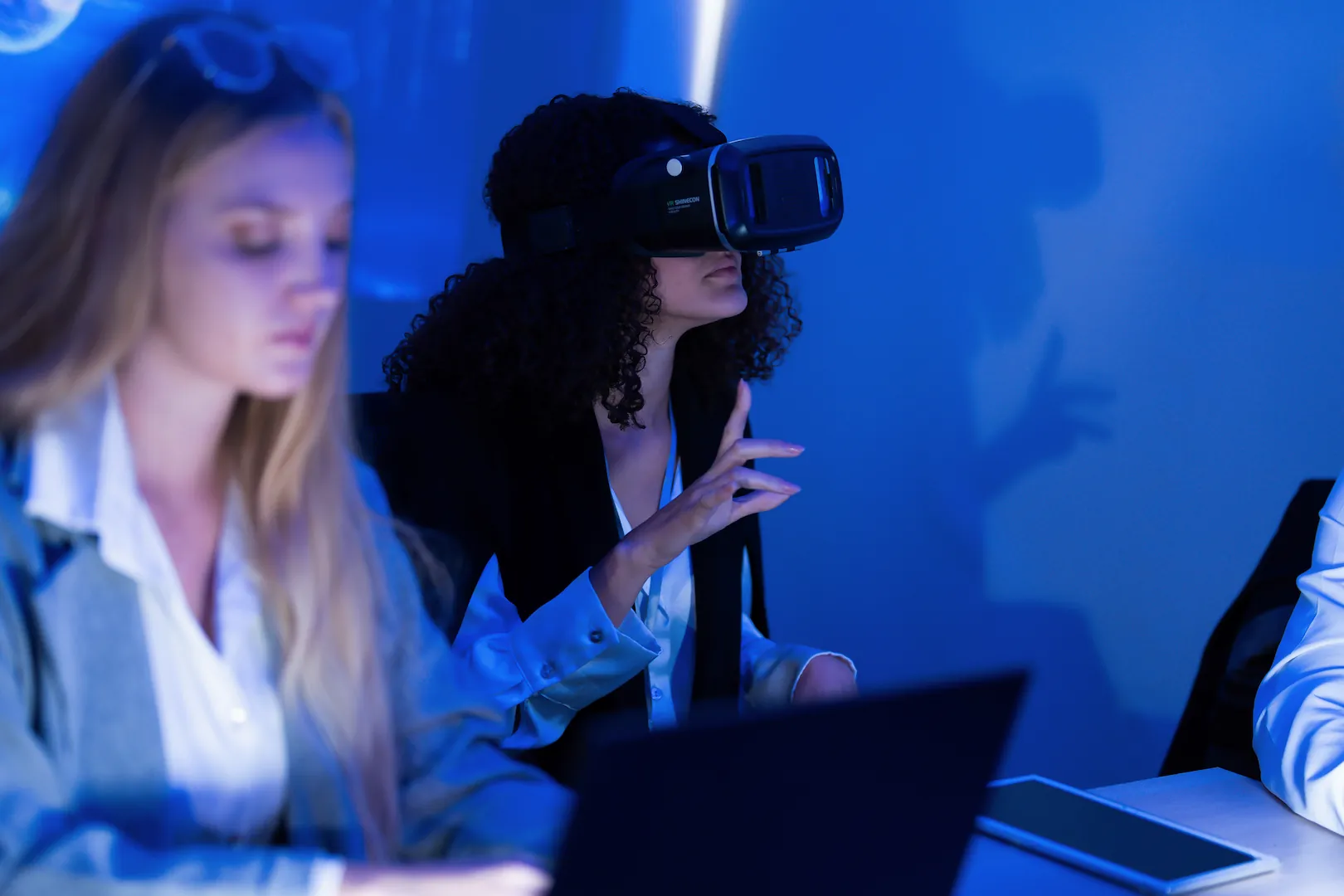
For example, a modern VR headset allows you to deliver an immersive learning experience anywhere in the world. Moreover, mixed reality overlays vital data onto the physical world, perfectly blending online learning with real-time tasks. As a result, immersive learning leverages these tools to deliver an unparalleled user experience. Ultimately, whether through full virtual world exploration or targeted AR, these tools drastically enhance the overall learning experience.
Proven Examples of Immersive Learning for Better Knowledge Retention
Now, what does this look like in practice? Actually, there are highly effective examples of immersive learning across a wide range of fields.
- First, consider health and safety and safety training. Here, employees can practice teaching situational awareness in a completely safe environment. Consequently, they learn to make decisions in high-pressure situations without real-world consequences.
- Secondly, vr training is phenomenal for developing soft skills. Specifically, immersive learning helps employees navigate difficult conversations through realistic role-playing.
- Thirdly, learning in higher education and science education benefit from authentic learning. For instance, medical students use VR to simulate real-world scenarios to practice surgeries.
- Finally, language learning is accelerated when students converse with virtual avatars, treating their second language as a practical tool rather than a textbook exercise.
Why You Must Implement Immersive Learning Practices Today
In conclusion, the benefits of immersive learning are undeniable for modern learning and development. According torecent studies, researchers found VR learners have significantly higher knowledge retention compared to those using traditional methods.
Besides, this form of immersive education is highly scalable. Therefore, immersive learning is also the most cost-effective way to provide practical experience across a global workforce. From now on, you must audit your training needs and identify areas for improvement where high-impact learning is required. Ultimately, embracing immersive training technology will ensure your teaching and learning programs deliver maximum ROI.